Pages

Showing posts with label Type 1 Diabetes. Show all posts

History


The word ‘diabetes’ comes from the Greek word for a siphon. This illustrates very clearly the main symptoms of type 1 diabetes – constant excessive drinking and passing of urine. The first written reference to diabetes dates back to 1500 bc. In 1889 Oscar Minkowski discovered that removal of the pancreas caused diabetes in animals. In 1921 Banting, Best, Collip and McLeod discovered a method of purifying insulin extracted from animals’ pancreases. The first patient to be treated with insulin received a dose in January 1922. Previously type 1 diabetes was more rapidly fatal then most cancers, and insulin was hailed as a cure for diabetes. However, by the 1930s it was clear that long-term complications became very troublesome.

Complications

High blood glucose levels for many years can damage the smallest blood vessels – capillaries. The particular tissues which are most affected by this process are the retina, nerves and kidney. These complications are known as ‘microvascular’ complications. The number of people with such complications increases as the duration of type 1 diabetes increases Large blood vessels are also affected by high blood glucose levels. These ‘macrovascular’ complications include premature heart attacks, strokes and poor circulation to the feet. Diabetes causes fat to be deposited in the arte-
rial walls, accelerating atherosclerosis (hardening of the arteries). The risk of developing these long-term complications of diabetes is directly related to how well the diabetes is controlled. It is possible to assess this by a single blood test which indicates the average blood glucose levels over a period of two months. This is possible as glucose becomes attached to the pigment in red blood cells (haemoglobin). The amount of glucose attached to haemoglobin is measured in the test as ‘HbA1c’. In non-diabetic people, the normal amount of glucose in the blood causes the level of HbA1c to be up to 6.0 per cent. A very well motivated person with type 1 diabetes may be able to achieve an HbA1c of 7.5 per cent or less. Some people can only manage to achieve HbA1c levels of over 12 per cent. A major study carried out in the US demonstrated very clearly the relationship between HbA1c and the chance of developing complications. In general, the higher the HbA1c, the higher the risk of developing complications.

A further important factor is that of blood pressure. In diabetes, the higher the blood pressure, the faster complications will develop. Very tight control of blood pressure has been shown to have a greater effect than very tight control of blood glucose in slowing the rate of progression of complications.

Although this may seem surprising at first, it has to be seen as a series of stages:

1. high blood glucose damages the capillaries and arteries
2. high blood pressure will cause the damaged capillaries to leak or burst
3. reversal of high blood pressure will have an immediate effect upon the
well-being of blood vessels
4. reversal of high blood glucose will just slow further damage

However, it has to be recognized that some people appear to be less sus-
ceptible to complications than others. Other unknown factors determine the
risk of complications for any one individual.

Read more

Living with type 1 diabetes


Few people who do not have type 1 diabetes actually appreciate the difficulty of living with a condition which requires attention every time the person wishes to eat or exercise.

To maintain the fine balance between blood glucose levels that are too high or too low requires detailed understanding of diabetes as well as hour to hour effort every single day. Adjusting insulin regimes to fit with work patterns, including shift work, is not always straightforward. In practice, individuals adopt habits which lead to average blood glucose levels which reflect a compromise that they themselves can tolerate. These are often higher than might be ideal, but considerable empathy and insight into individual circumstances is required before it can be said that control ‘must’ be better. Most other people in the diabetes team do not need to take diabetes home with them. During any minor illness the need for insulin rises and major adjustments are needed to keep control.

In order to hold a driving licence people with diabetes have to be able to recognize the early symptoms of hypoglycaemia, and have to obey the driving rules:

• test blood glucose before driving;
• always keep glucose tablets or sweets in the car;
• plan longer journeys to ensure appropriate stops for snacks.

Blood glucose testing

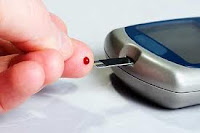
It is only possible to ‘know’ one’s own blood glucose level if it is either very high or very low. For this reason it is important for people with diabetes to be able to test their blood glucose level. By using a finger pricking device, a tiny drop of blood can be obtained. This is placed on a disposable strip con-
nected to a meter.

The level of glucose in blood is measured in millimoles per litre (mmol/l). The non-diabetic fasting range for blood glucose is 3.5 to 5.5 mmol/l. In type 1 diabetes blood glucose levels would ideally be between 4 and 7 mmol/l before meals, but in practice much higher numbers may be observed. For each individual, a target range will have been agreed. In very long-standing type 1 diabetes blood glucose levels may vary unpredictably and it may be necessary to aim for higher numbers in order to avoid very frequent hypos.

Read more

Essentials of management


Insulin

Insulin must be replaced to maintain life. As the insulin molecule is a peptide (a small protein), it would be broken down in the stomach if swallowed – just like any protein food. Insulin has to be injected into the fat layer under the skin.

This may be done using a disposable syringe with insulin drawn from a vial, or by using a pen injector. Insulin is usually advised to be injected through the skin into the fatty tissue of the abdomen, the upper thighs or hips.
There are two basic types of insulin regime. A combined injection of shortacting insulin and intermediate acting insulin may be given before breakfast and before the evening meal. This has the advantage of simplicity, but the disadvantage that meals have to be eaten at fairly fixed times and
in fairly fixed quantities.
The second regime tries to mimic the normal situation, with a low background of insulin being provided by a single daily injection of longer-acting insulin, together with the use of very short-acting insulin taken at a time when it is convenient to eat a meal, and in an amount corresponding to the size of that meal. Although this may involve three or more injections per day of very short-acting insulin, these can be given using a convenient pen device.

Food


People with diabetes can eat normally, with a few modifications. Overall, the pattern of eating advised is merely that of a healthy lifestyle – not too much sugar, avoid fatty foods, and plenty fruit and vegetables. Carbohydrate foods such as bread, pasta, potatoes and biscuits need to be considered in determining what dose of insulin is required. Since the 1930s carbohydrate has been ‘counted’ as 10 g exchanges. For instance, an apple, a small potato or a digestive biscuit each can be counted as a 10 g exchange of carbohydrate. A person with diabetes is trained to assess how many carbohydrate exchanges would be in a meal.

Hypoglycaemia

This word merely means ‘low blood glucose’ and is usually shortened to ‘hypo’. Hypos occur when the balance of injected insulin and food eaten is not correct. If, for instance, only a small meal had been taken despite a dose of insulin appropriate for a larger meal having already been injected, then the insulin would have too great an effect upon blood glucose and the level will fall.
A hypo causes sweating, shakiness, a feeling of great hunger and eventually muddled thinking. If it is not treated by eating some sugary food, the muddled thinking will get worse, and eventually consciousness will be lost. There is a great risk that a person may be assumed to have drunk too much alcohol because of the uncoordinated movements and confusion.
Especially after many years of type 1 diabetes, awareness of the early symptoms of hypos becomes blunted. There is then a risk of loss of consciousness without warning. The treatment of hypoglycaemia is administration of any sugary drink. A hypoglycaemic person may be uncooperative. Treatment from
a doctor or paramedic would involve intravenous administration of glucose, or subcutaneous injection of glucagon. Glucagon is a hormone which has an opposite effect to that of insulin and causes the liver to produce glucose.

Ketoacidosis

If a person with type 1 diabetes did not take insulin, glucose could not be used by the body and fat (the main alternative fuel) would be mobilized excessively. High levels of ketones would be present in the blood and urine. As ketones are weak acids, the blood becomes slightly acidic. Nausea and then vomiting occurs. Once vomiting starts the condition is likely to be fatal within one to two days unless treated.
Anyone with type 1 diabetes who is ill is advised to test their blood glucose frequently and also to test their urine for ketones. The insulin dose always needs to be increased during illness, even if no food is eaten (because the body becomes resistant to ordinary levels of insulin). It is vital that expert medical
help is obtained. Hospital admission is necessary for established ketoacidosis.

Read more

What causes type 1 diabetes?


Diabetes is a disorder in which blood glucose levels are high. In normal health, blood glucose levels are precisely controlled by the hormone insulin. It is made by the beta cells in the pancreas gland, an organ behind the stomach. Minute to minute control of insulin production by the beta cells normally keeps blood glucose levels constant. After a meal, the rate of insulin production rises sharply. Type 1 diabetes is the result of destruction of the beta cells in the pancreas.

This is most often caused by the body’s defence mechanisms attacking the cells as though they were invaders (an ‘autoimmune’ process). The process of beta cell destruction happens over a period of many months, but symptoms can start very suddenly once the number of functioning beta cells falls to a critical level.

Who gets type 1 diabetes?

Type 1 diabetes used to be called juvenile onset diabetes. It can occur any time from early childhood into late adult life, but starts most commonly in early adolescence. The condition is slightly more likely to occur if family members have type 1 diabetes, but many people have no such family history.

Approximately 0.2 per cent of children of school age have type 1 diabetes in the UK. In the population as a whole it affects around 0.3 per cent.

How does it present?
The main symptoms come on over a period of weeks and are:
  • thirst
  • passing large amounts of urine
  • weight loss
  • tiredness
  • skin infections, especially thrush.

There will be glucose (sugar) present in the urine. Also, ketones are likely to be present in the urine. Ketones are the by-product of fat breakdown and are normal in trace amounts for anyone during fasting. However, excessive amounts of ketones are only present in urine when lack of insulin allows fat
to break down excessively.

Read more